



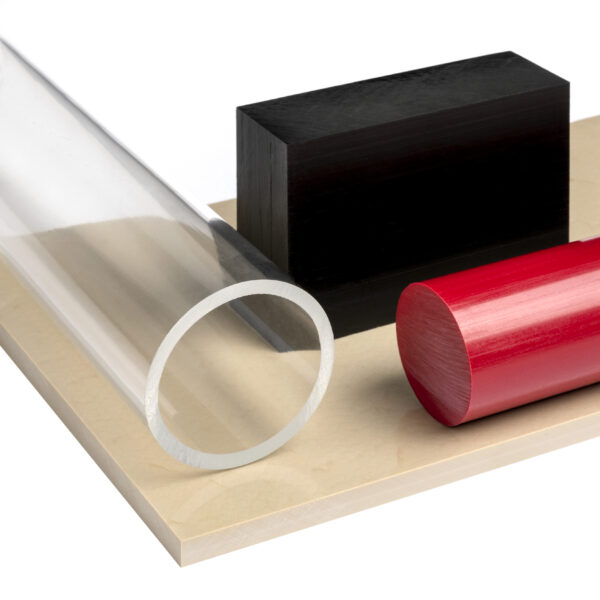
Types of plastic BKB Precision works with
Various types of plastic
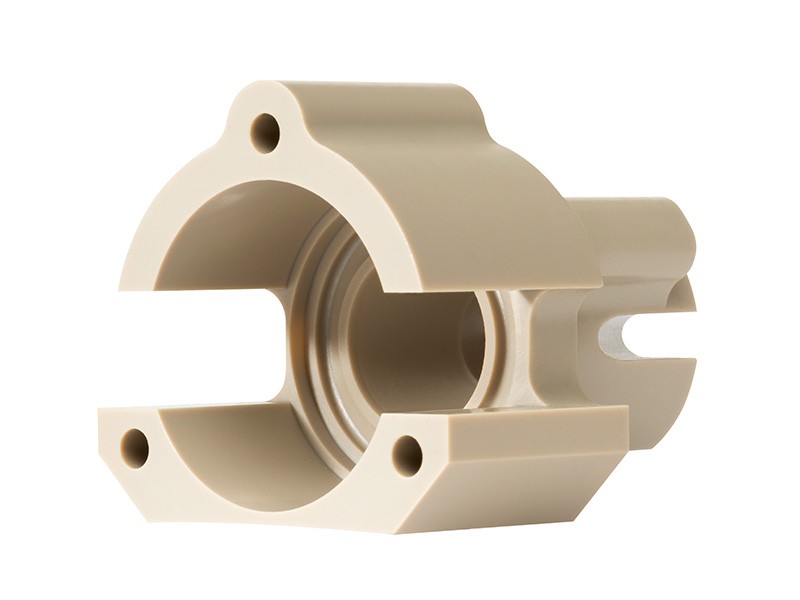
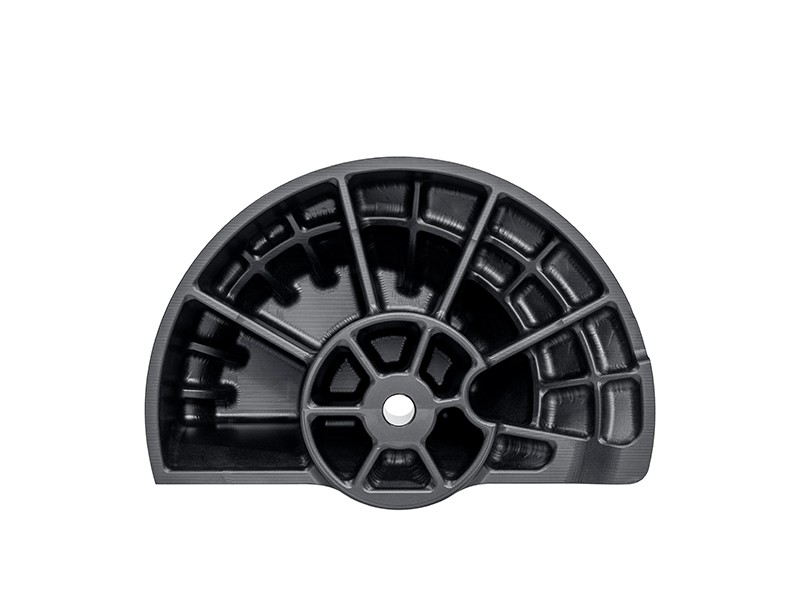
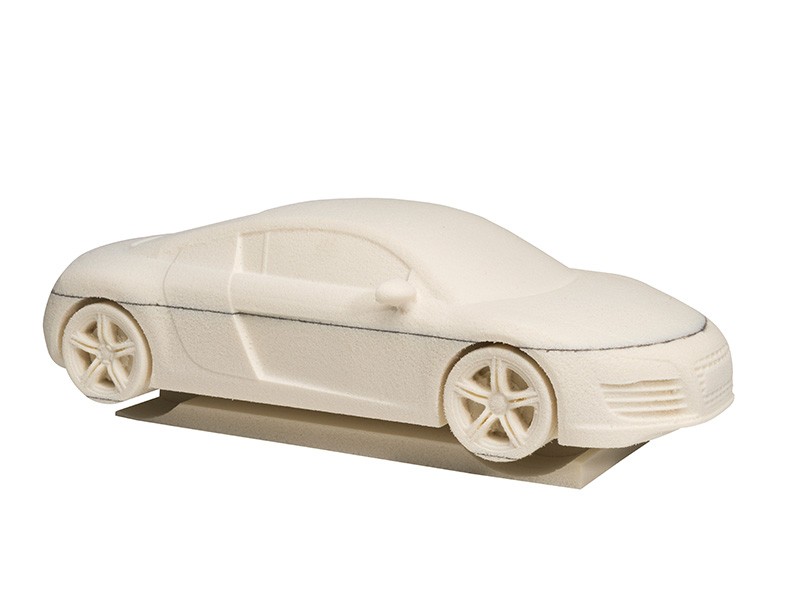
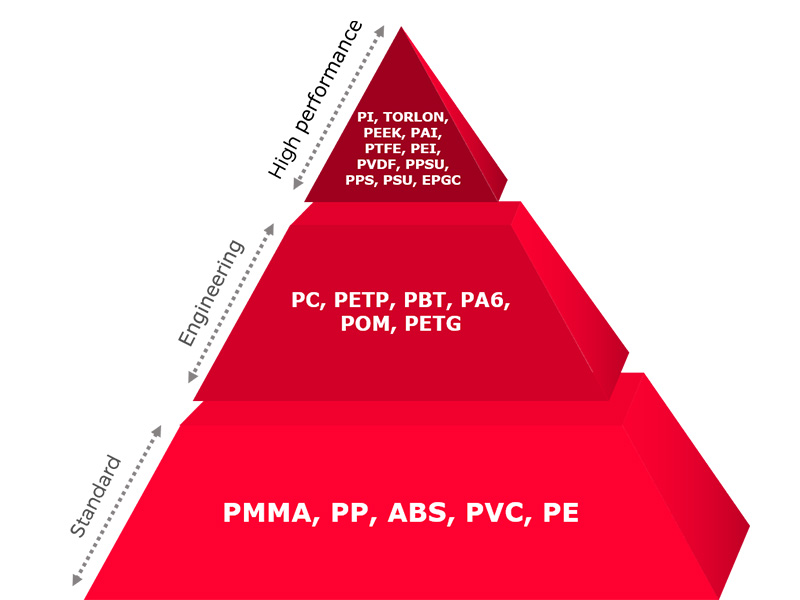
An overview of characteristics
To give you an idea, we made an overview of the types of plastic that we process. (See diagram.) We have separated them into high-performance plastics and engineering plastics.
We are also experienced with the following plastics and combinations of materials: Eslon material (in PC or PMMA), PP (Polypropylene), HPL (Volkern, Trespa), PSU (Polysulfone) and ESD. We also deal with filled plastics, coloured plastics and post-treated plastics.
This overview also highlights the many differences between these types of plastic, including differences in temperature resistance, dimensional stability and wear resistance. All these play a role when it comes to choosing the type of plastic you need. One thing is certain: with plastic, we can make the almost impossible possible.
Which plastic is right for your application?
The choice of a plastic is usually not determined by the material’s name, but by the properties required for a specific application. Consider, for example, heat resistance, wear resistance, chemical resistance, or dimensional stability.
For instance, a different plastic is often chosen for a component in a semiconductor machine than for a bearing, a medical application, or an analytical instrument.
The selection guide below will help you make an initial selection.
Select by property
Does a component need to function for extended periods at high temperatures? If so, high-performance plastics are often the best choice.
Commonly Used Materials:
Typical Applications:
- Semiconductor equipment
- Medical equipment
- High-tech machinery
- Analytical systems
More and more engineers are replacing metal parts with plastic to reduce weight without compromising performance.
Commonly used materials:
Lees ook: Kunststof versus metaal.
What factors determine the right choice of material?
When selecting a plastic, engineers typically consider several factors:
- Temperature range
- Chemical exposure
- Mechanical stress
- Wear and tear
- Desired tolerances
- Weight
- Cleanliness requirements
- Service life
- Certifications
- Cost
By considering these factors early in the design process, a better material selection can often be made, and unnecessary costs can be avoided.
Overview of Commonly Used Types of Plastics
| Plastic | Key Property | Typical Application |
|---|---|---|
| PEEK | High temperature and chemical resistance | Semiconductor and medical technology |
| PEI | Electrical insulation and dimensional stability | High-tech equipment |
| PPS | Temperature and chemical resistance | Electronics and mechanical engineering |
| PAI | Extremely wear-resistant | Precision components |
| PTFE | Low friction and chemical resistance | Analytical equipment |
| POM | Wear-resistant and dimensionally stable | Gears and bearings |
| PETP | Hard and dimensionally stable | Precision parts |
| PVC | Chemical resistance | Processing industry |
| PMMA | Transparent | Viewing windows |
| PC | Impact-resistant and transparent | Protective covers |
Frequently Asked Questions About Types of Plastics
PEEK, PTFE, PEI and other high-performance plastics are widely used in the semiconductor industry due to their dimensional stability, purity, and chemical resistance.
Engineering plastics are suitable for many industrial applications. High-performance plastics are designed for situations that place higher demands on temperature, wear, chemical resistance, or precision.