



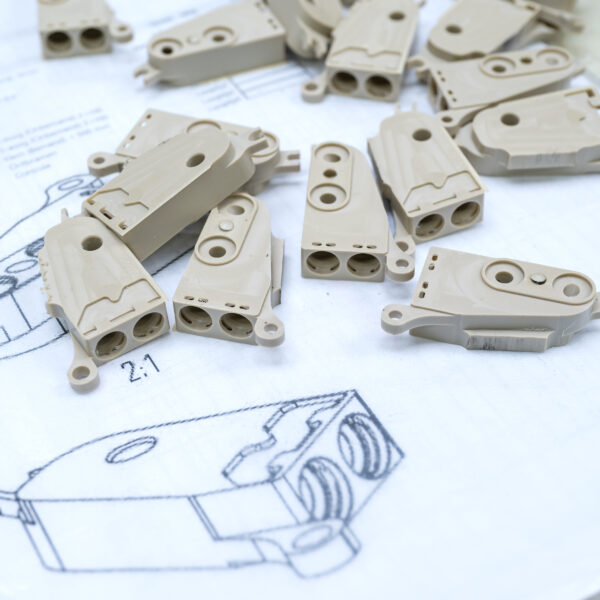
Plastic Instead of Metal: When Is It the Best Choice?
Plastic versus Metal: The Key Differences
When developing an engineering component, metal is often the first material that comes to mind. However, plastic proves to be an excellent alternative in many applications. The choice depends on factors such as weight, load-bearing capacity, chemical resistance, temperature, and cost.
The question, therefore, is not so much which material is better, but which material best meets the functional requirements of the application.
| Property | Plastic | Metaal |
| Weight | Light | Heavier |
| Corrosion resistance | Excellent | Often requires additional protection |
| Electrical insolution | Good | Conductive |
| Chemical resistance | Often excellent | Depends on the alloy |
| Temperature resistance | Depends on the material | Often higher |
| Maintenance | Limited | May require coating or protection |
| Machinability | Easily machinable | Easily machinable |
| Cost | Often cost-effective for complex parts | Depends on the type of material |

The History and Rise of Plastics
For many years, metal has been the undisputed standard in the manufacturing industry, but that status is now under pressure. In recent years, plastics have made an impressive advance as an alternative. While they were once used primarily as inexpensive substitutes for everyday applications, we now have access to a wide range of engineering and high-performance plastics.
Thanks to new production methods and a growing understanding of material properties, engineers are increasingly using plastics for demanding applications. Particularly in precision sectors such as the semiconductor and analytical industries, where margins for error are minimal, plastics are increasingly proving to be a smarter and better alternative to metal.
When should you choose plastic over metal?
Plastic is often chosen when one or more of the following properties are important.
Weight reduction
Plastics are significantly lighter than metals. This can offer advantages for moving parts, machine construction, and applications where transport weight is a factor.
Preventing Corrosion
In humid or chemically aggressive environments, plastic often offers a longer service life than steel or aluminum.
Electrical insulation
Many plastics have excellent insulating properties and are therefore widely used in high-tech equipment and electronics.
Chemical Resistance
Materials such as PTFE, PEEK, and PEI are resistant to aggressive chemicals and cleaning processes.
Manufacturing Complex Parts
With modern CNC machining techniques, complex plastic parts can be manufactured with a high degree of precision.
The Advantages of Plastic Over Metal
The decision to use plastic is increasingly based on technical and economic considerations rather than on assumptions. The advantages speak for themselves:
- Lower weight without loss of strength
- Corrosion-resistant and low-maintenance
- High dimensional stability with precise machining
- Low coefficient of friction
- Saves costs on materials, transportation, and production
With the wide variety of plastics with unique properties available on the market today, there is always a plastic that suits your application.
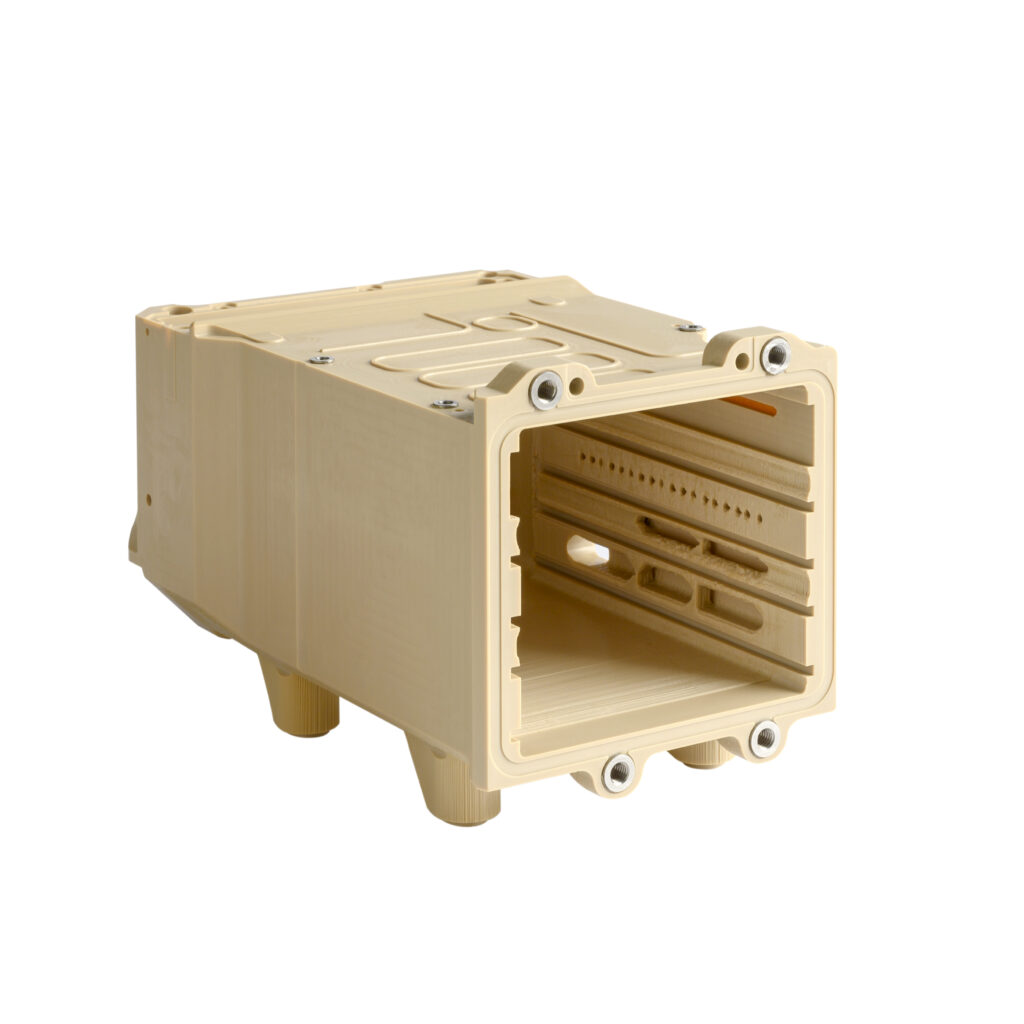
From Metal to Plastic: Here’s What That Looks Like in Practice
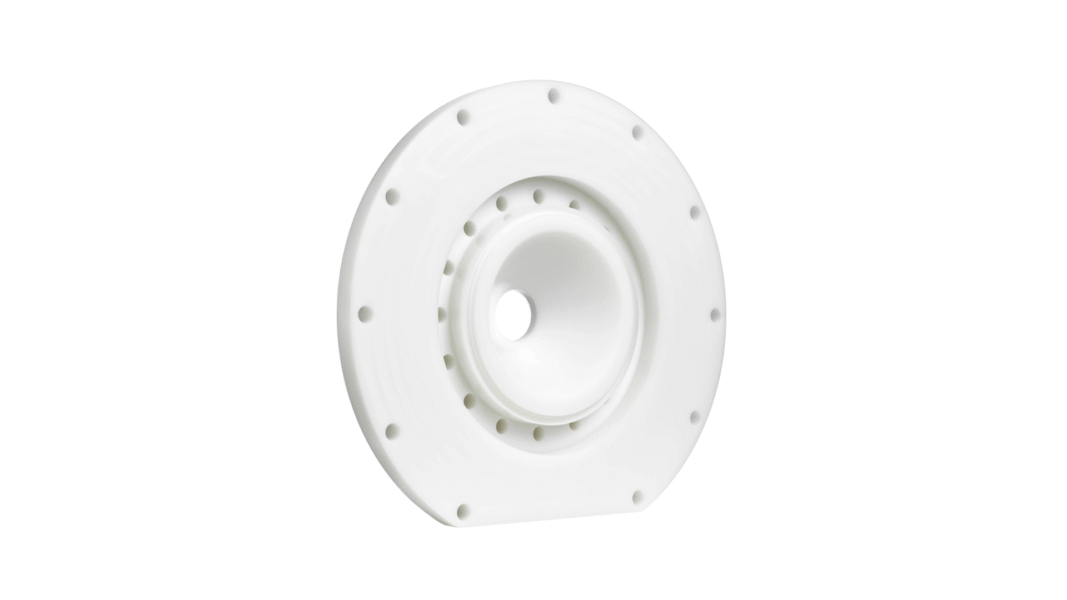
Sometimes the difference lies in the details. A customer in the semiconductor sector faced a choice: continue working with metal, or make the switch to plastic. Together with BKB Precision, they explored the possibilities. By cleverly redesigning the component in plastic, each unit became more than half a kilo lighter. That savings translated into lower material costs, reduced shipping weight, and a more stable process.
BKB Precision was involved from the start of this transition project: from material advice and machining techniques to cleaning and assembly. Thanks to our knowledge and experience, we were able to adapt quickly and work together to achieve an optimal end product.
We have since successfully guided multiple customers—including those in the semiconductor, analytical, and other industries—through similar material transitions. Find out how the entire project unfolded or contact us for further assistance with your project.
In which industries is plastic being used more and more, and why?
In the semiconductor industry, cleanliness, dimensional stability, and low outgassing play a crucial role. Plastics such as PEEK, PTFE, and PEI offer excellent properties for these applications.
Plastic is widely used in medical devices because of its combination of sterilizability, precision, and chemical resistance.
Weight reduction and reliability are making plastic an increasingly attractive option for defense applications.
Plastics are used in laboratory and analytical equipment because of their dimensional stability and chemical resistance.
From Metal to Eco-Friendly: How Plastics Contribute to Sustainability
In many applications, plastics prove to be not only more practical but also more sustainable than metal. They are lighter, resistant to corrosion—which means they last longer—and require less energy to produce and use. Furthermore, less mass also means fewer emissions during transportation, and reuse and recycling are possible in an increasing number of cases.
At BKB Precision, we take our responsibility seriously. We publish our annual progress report on sustainability and are constantly working to make our processes and decisions even more sustainable.

How do you determine which material is best suited?
The choice between plastic and metal is determined by several factors:
- Mechanical load
- Temperature
- Chemical resistance
- Desired tolerances
- Service life
- Weight
- Cleanability
- Certification requirements
- Cost
By considering these factors early in the design process, significant benefits can often be realized
Future Outlook: What Can We Expect?
The shift from metal to plastic is still in its infancy. But thanks to ongoing innovations in materials, more advanced machining techniques, and growing expertise among engineers, the potential applications of plastics will continue to expand. Think of lighter machines, smarter designs, and more sustainable production processes.
At BKB Precision, we push the technical boundaries every day. We continuously invest in knowledge, machinery, and collaboration to get the most out of plastic processing, and we’ll continue to do so. What’s groundbreaking today could be the new standard tomorrow.
Curious about how we can support you with your next project?


Frequently Asked Questions
Not always. Metals are often stronger under high loads. However, some high-performance plastics can be an excellent alternative in specific applications.
That depends on the application. Thanks to its lighter weight, lower maintenance requirements, and efficient production, plastic can often offer an attractive total-cost solution.
These include semiconductors, medical technology, analytical equipment, defense, and high-tech mechanical engineering, among others.
No. Plastics do not corrode like steel or other metals.
When high temperatures, chemical exposure, extreme precision, or specific certifications are a factor.